Twin-face sheepskin
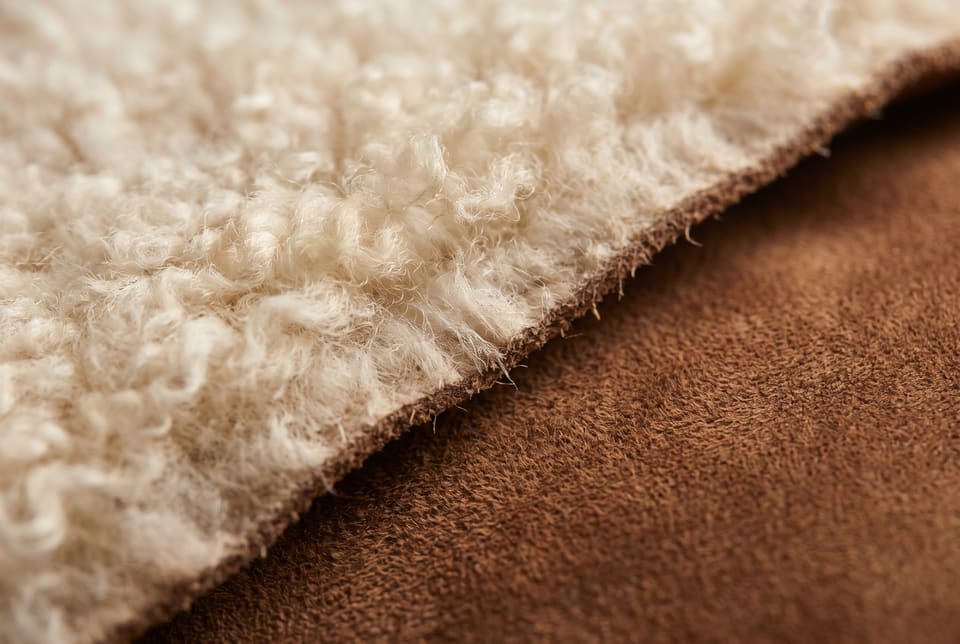
The classic UGG® boot is built from twin-face sheepskin, which Deckers, the brand's owner, writes as "twinface". It is a single sheep hide tanned with the wool left on. One face is the fleece, which forms the soft lining inside the boot; the other is the skin side, finished as suede, which forms the outside. Because lining and upper are the same piece of material, there is no separate fabric between your foot and the outer suede.
Deckers says the wool it uses comes off the hides used to make its twinface sheepskin products, so "a live animal is not being sheared" to produce it. Its animal welfare policy states that it accepts only hides that are a by-product of the meat industry, from animals not raised exclusively for their pelts. More on sourcing is below.
Under the US Fur Products Labeling Act, any animal skin with hair or fleece attached counts as fur. Deckers requires its suppliers to comply with that law and with the Wool Products Labeling Act, and US retail listings for sheepskin styles commonly state that the product "contains real fur from sheep or lamb."
Why sheepskin feels warm but not stuffy
Sheepskin boots have a reputation for keeping feet warm in winter without feeling as clammy as some synthetic linings. Wool industry bodies explain this with two properties of the fiber:
- Insulation. The Woolmark Company, the Australian wool industry's marketing body, says wool fibers have a natural crimp that traps tiny pockets of air, and still air is a good insulator.
- Moisture handling. Woolmark says wool fibers can absorb moisture vapor, and the International Wool Textile Organisation says wool can absorb up to 35% of its own weight in moisture, which it then releases as vapor.
Together, these properties are why wool is often described as temperature-regulating. How comfortable any particular pair feels still depends on the style, the fit, the conditions and the person wearing it, so owners' reviews are a useful reality check.
Suede and leather
Suede is leather finished to a soft, napped surface. On twin-face sheepskin boots, the outer suede is the skin side of the same hide that carries the fleece inside. Other UGG styles use suede or leather from cattle, textiles, rubber or treated waterproof materials, depending on what the product is designed for, so check the materials listed for each style. Deckers reports that it could trace all of its sheepskin, and 78.01% of the cattle hides used in its footwear, back to the processing facility in fiscal 2026.
Suede looks and feels luxurious but is sensitive to water, salt and oil. Classic suede styles are not designed as waterproof boots; for wet weather, look at weather boots, and see our care guide for protecting and cleaning suede.
UGGplush and UGGpure
Not every UGG lining is sheepskin. Many styles use textile linings that are designed to feel like fleece:
- UGGpure is how Deckers describes wool harvested off twinface sheepskin, made into a textile lining.
- UGGplush, introduced in Deckers' fiscal 2020 (April 2019 to March 2020), combines UGGpure wool with "a percentage of TENCEL™ Lyocell woven into a recycled polyester textile backing," according to the company. Lyocell is a fiber made from wood pulp, and TENCEL is a brand of lyocell.
The blend varies by product. Deckers described one UGGplush sock liner in 2024 as made from 60% upcycled wool, and many product listings show a 60% wool and 40% lyocell mix, but other ratios appear, so check the label of the style you are considering. In its fiscal 2026 report, Deckers said all UGGpure had been converted to UGGplush.
Soles: Treadlite by UGG and SugarSole
Treadlite by UGG
Treadlite by UGG is the name of the brand's own outsole, which Deckers has called the brand's "signature" outsole and uses as its benchmark for cushioning and traction. The company describes what the sole does rather than what it is made of; we have not found a published breakdown of its composition.
SugarSole
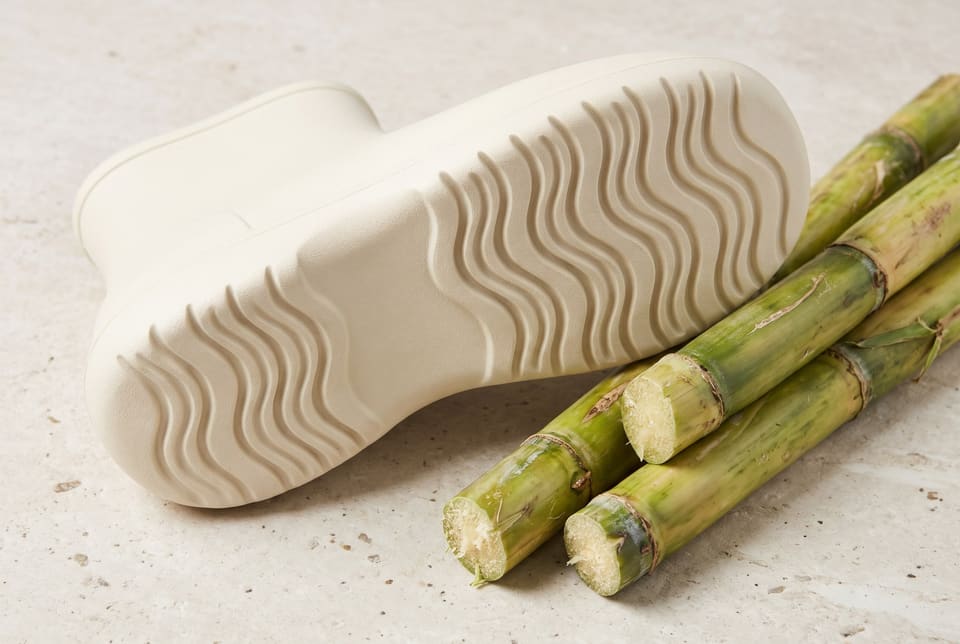
SugarSole is UGG's name for soles made with EVA, a lightweight foam widely used in footwear, that is partly derived from sugarcane. In Deckers' words, ethanol extracted from sugarcane is "converted into Ethylene, which makes up part of the EVA polymer compound." Coverage of the brand's Plant Power collection in March 2021 described a SugarSole foam outsole, and Deckers' October 2022 announcement of a regeneratively sourced Classic boot said its SugarSole outsole was made from fast-growing sugarcane.
Deckers reports that recycled or bio-based EVA rose from zero in fiscal 2019 and 2020 to 36.81% of the EVA in UGG footwear in fiscal 2024, almost all of it sugarcane-based, and said the brand intended to convert its classic franchise to sugarcane EVA bottom units. Note that "bio-based" describes where the raw material comes from; it does not mean the finished sole is biodegradable.
Recycled and "preferred" materials
Deckers groups recycled, renewable, regenerated and natural materials under the label "preferred materials" and reports on them each year. Its most recent UGG-specific figures, for fiscal 2024, say:
- 60.36% of the materials in UGG footwear, and 49.70% of the materials in its apparel, accessories and home goods, were "preferred";
- the brand used 5.16 million pounds of recycled polyester across its products and packaging; and
- the wool in UGG footwear was either repurposed from sheepskin (97.83%) or certified to the Responsible Wool Standard (2.17%).
For fiscal 2026, Deckers reports company-wide rather than brand-by-brand figures: 69.07% of the fibers in its footwear were preferred materials, all of its wool was repurposed or certified to the Responsible Wool Standard, and 26.43% of its EVA was recycled or bio-based. Its policy rules out non-certified virgin wool in products made after 2025. These are the company's own figures; UGG Review has not audited them.
Where the sheepskin comes from
- Origin. Deckers' annual report for fiscal 2026 says the sheepskin used in a significant portion of UGG products is "sourced primarily from Australia and processed by two tanneries in China." Its sustainability report puts Australia's share of the sheepskin hides in its footwear at 99.42% in fiscal 2026.
- A by-product. The company says its hides come from the meat industry, so it deals with processing facilities rather than farms.
- Certified tanneries. Deckers reports that all of the sheepskin and leather hides in its products come from tanneries certified by the Leather Working Group, a non-profit, multi-stakeholder initiative focused on more sustainable leather production, although the same report notes exceptions for some internal components and lifestyle products.
- Animal welfare. Deckers' animal welfare policy says it does not source wool or sheepskin from mulesed sheep and that suppliers must certify this. Mulesing is a practice used on some sheep to prevent flystrike, which the company says it does not support.
- Regenerative grazing. In 2021, Deckers set up a long-term grant with the Savory Institute, and it says that as of March 31, 2026, UGG had influenced about 1.64 million acres of grassland across 97 farms in Australia. In October 2022, UGG launched its first Classic boot made with regeneratively sourced materials, using sheepskin certified through the Savory Institute's Land to Market program, and it later released a wider Regenerate by UGG collection.
Real sheepskin or synthetic? Checks that don't damage the product
Genuine sheepskin is a hide with wool growing out of it, while synthetic "fleece" is made of fibers attached to a knitted or woven fabric backing. That difference is the basis for a few simple, non-destructive checks:
- Part the fleece. Gently push the fibers apart with your fingers. On sheepskin, the wool grows straight out of a continuous skin. On synthetic pile, you will usually see a grid-like fabric backing between the tufts.
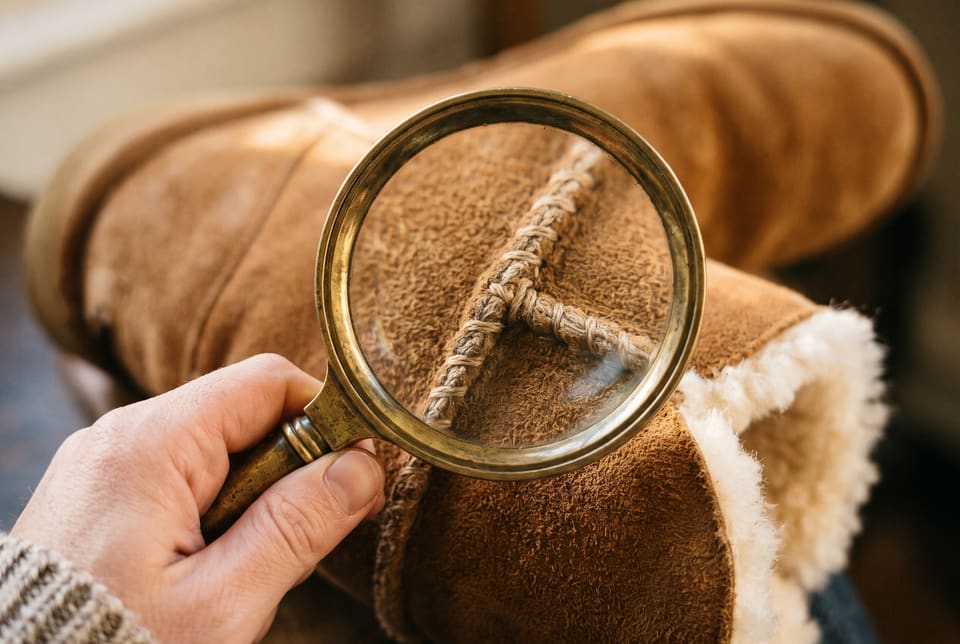
- Look at an edge. Where the lining folds over at the collar or meets a seam, twin-face sheepskin shows fleece and suede as two faces of one material. A synthetic lining usually shows a separate fabric layer glued or stitched to the upper.
- Look at the fibers. Wool fibers are crimped and vary slightly in thickness and length. Synthetic fibers tend to look uniform and glossy, and they can feel slippery.
- Read the label and the listing. The material composition should be printed on the label or product page. In the US, labels and listings for sheepskin products typically disclose real fur from sheep or lamb.
Caring for these materials
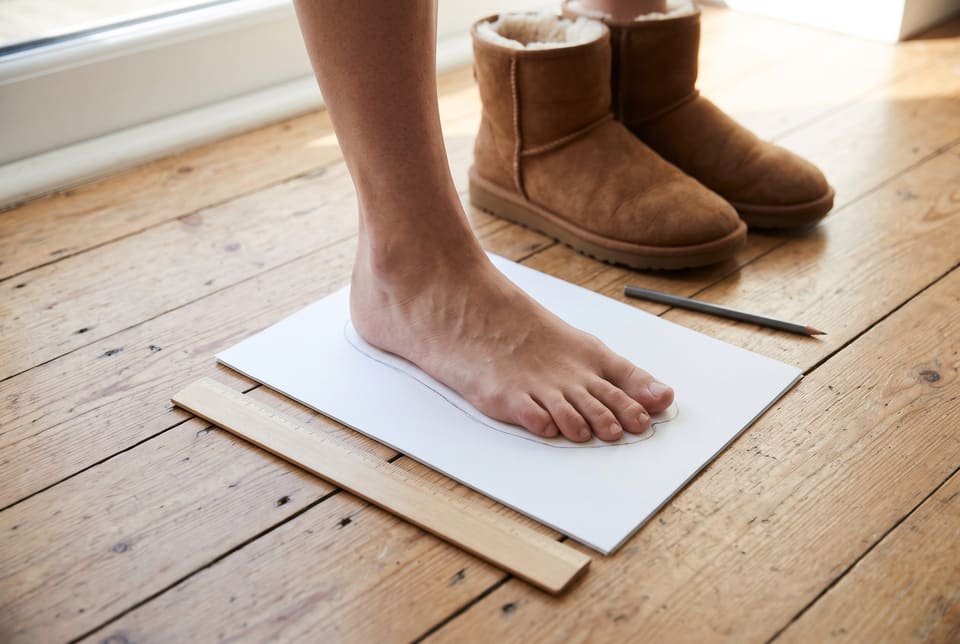
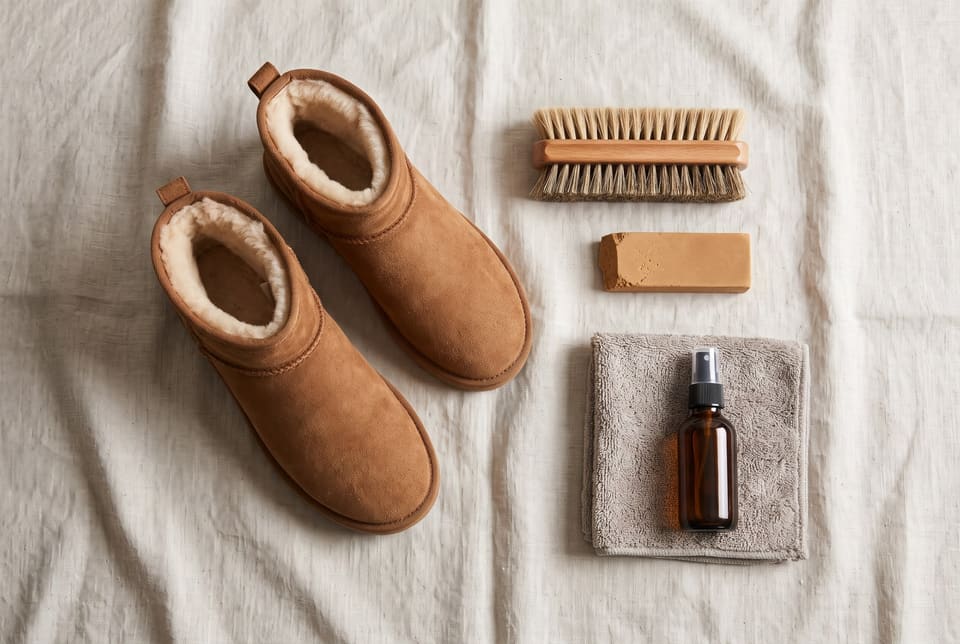
Sheepskin and suede need gentler treatment than leather sneakers: brush suede when it is dry, treat stains with products made for suede and sheepskin, and let wet boots dry slowly away from direct heat. Our care guide covers each step, and our sizing guide covers choosing the right size.
In November 2021, UGG launched UGGrenew, a refurbishment service run with a partner company for classic boots in the United States, and Deckers still listed the program in its fiscal 2026 report. Check UGG's website for current availability and terms.
Frequently asked questions
Are UGG boots made of real sheepskin?
Many UGG styles, including the classic boots, are made of genuine twin-face sheepskin, a hide with the wool still attached. Others use textile linings such as UGGplush or other materials by design, so check the materials listed for each style.
What is UGGplush made of?
Deckers describes UGGplush as wool, harvested from twinface sheepskin, combined with a percentage of TENCEL lyocell and woven into a recycled polyester backing. The blend varies by product; many listings show 60% upcycled wool and 40% lyocell.
Is the wool in UGG boots sheared from live sheep?
Deckers says no. It says the wool in its linings comes off the hides used to make its twinface sheepskin products, and that it accepts only hides that are a by-product of the meat industry.
Where does UGG’s sheepskin come from?
According to Deckers’ fiscal 2026 annual report, the sheepskin used in a significant portion of UGG products is sourced primarily from Australia and processed by two tanneries in China. Deckers reports that the tanneries it uses are certified by the Leather Working Group.
What is SugarSole?
SugarSole is UGG’s name for soles made with EVA foam that is partly derived from sugarcane. Sugarcane ethanol is converted into ethylene, which makes up part of the EVA. Bio-based does not mean biodegradable.
How can I tell real sheepskin from a synthetic lining?
Gently part the fleece: real sheepskin grows from a continuous skin, while synthetic pile sits on a fabric backing. Check where the lining meets an edge or seam, look for crimped, varied wool fibers, and read the material label. Never burn or cut the product to test it.
Sources
- Deckers Brands FY26 Creating Change report (fiscal year ended Mar. 31, 2026)
- Deckers Brands FY24 Creating Change brand appendix (UGG section)
- Deckers Brands Ethical Sourcing and Animal Welfare Policy (adopted January 2025)
- Deckers Outdoor Corp. Form 10-K for fiscal 2026
- Deckers Brands: UGG launches first Classic boot made with regeneratively sourced materials (Oct. 13, 2022)
- Deckers Brands: UGG unveils next iteration of Regenerate by UGG collection (Jan. 15, 2024)
- Deckers Brands: UGG launches UGGrenew refurbishment program (Nov. 4, 2021)
- Textile World: UGG debuts Plant Power collection (Mar. 11, 2021)
- The Woolmark Company: wool fibre
- The Woolmark Company: what is the wool fibre?
- International Wool Textile Organisation: breathability
- Leather Working Group: about
- 15 U.S. Code § 69, Fur Products Labeling Act definitions (Cornell LII)