Before the brand: sheepskin footwear
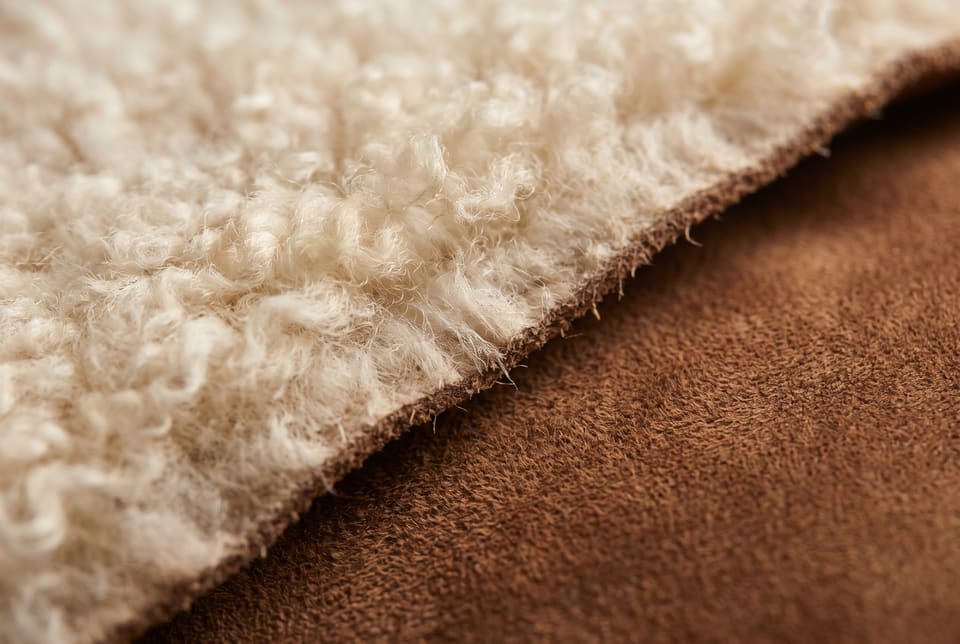
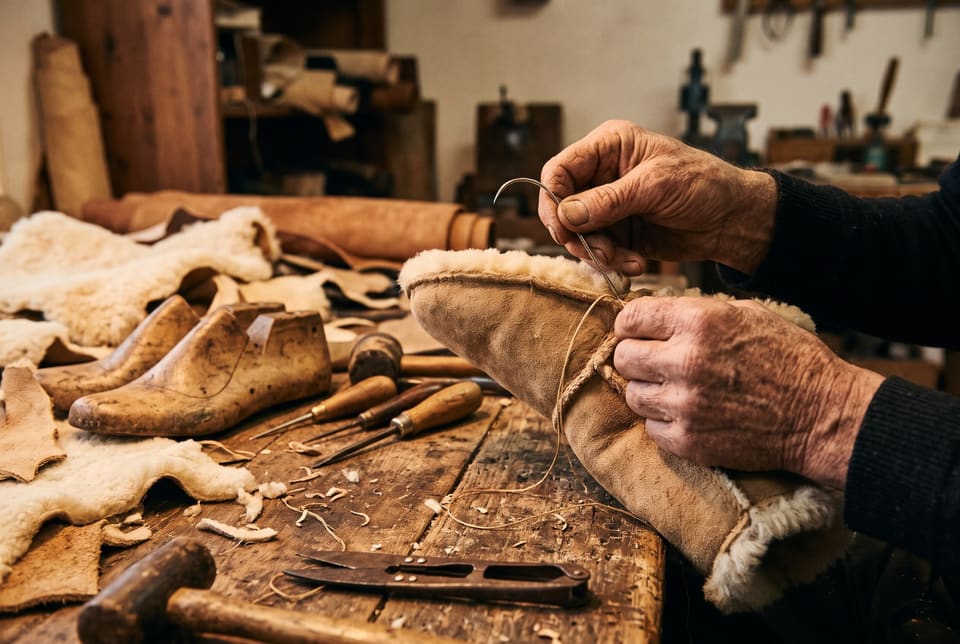
Sheepskin is a sheep's hide tanned with the wool still attached, and in sheep-farming countries it has long been turned into warm clothing and footwear. Australia, with its long history of sheep farming, was no exception. Exactly when Australians began making the simple, slip-on sheepskin boot we now call the ugg boot is hard to pin down, and much of the early story rests on memory and folklore rather than records.
One popular account says that in the 1920s shearers wrapped sheepskin around their feet to stay warm in the shearing sheds. When the British newspaper The Independent retold it in 2004, it presented that story as folklore, and we have not found records that confirm it.
Another story links the boots to the First World War. The Royal Air Force Museum in London holds a pair of thigh-length sheepskin flying boots from 1918 and explains that specially designed flying boots were introduced in 1916 to protect aircrew from the cold over the Western Front. Pilots and observers nicknamed them "fug boots" because they were so warm. The nickname is documented. The popular claim that "fug boots" later became the Australian word "ugg" is not: we found no reliable source that traces one to the other.
Where the word "ugg" comes from
Nobody knows for certain. The Australian National Dictionary Centre at the Australian National University says the term is of unknown origin and is perhaps an alteration of "ugly boot". It dates the earliest evidence for the word to the late 1960s and notes that this early evidence suggests the boots first became popular with surfers. Over the years the name has been spelled "ugg", "ugh" and "ug".
Several Australian makers have claimed a role in the name. Frank Mortel, who set up a small sheepskin factory after emigrating from the Netherlands in 1958, told The Independent in 2004 that his family "called them Uggs from the start". Claims like his are part of the story, but they are difficult to verify independently.
Surf culture in the 1960s and 1970s
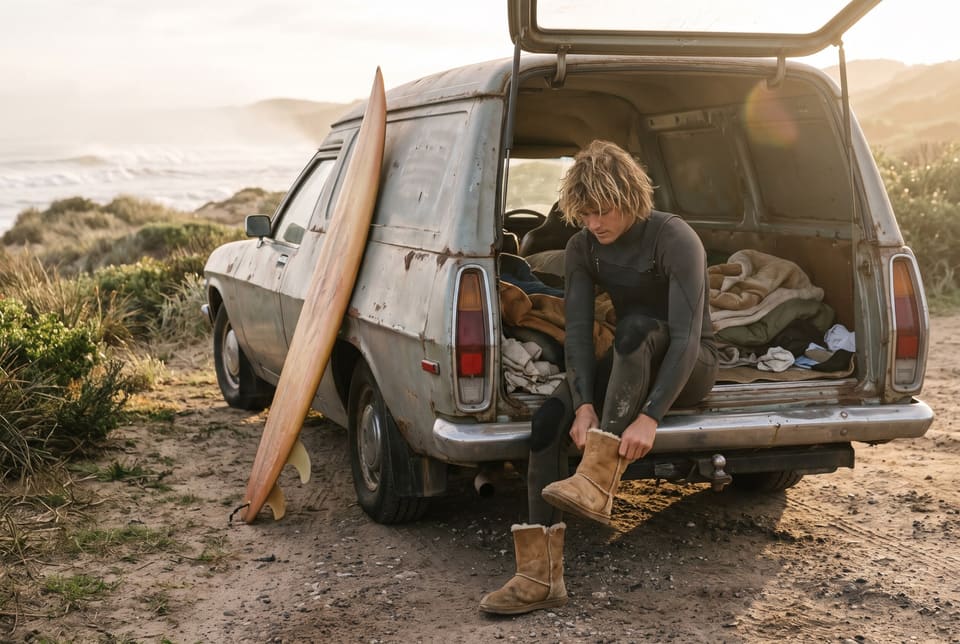
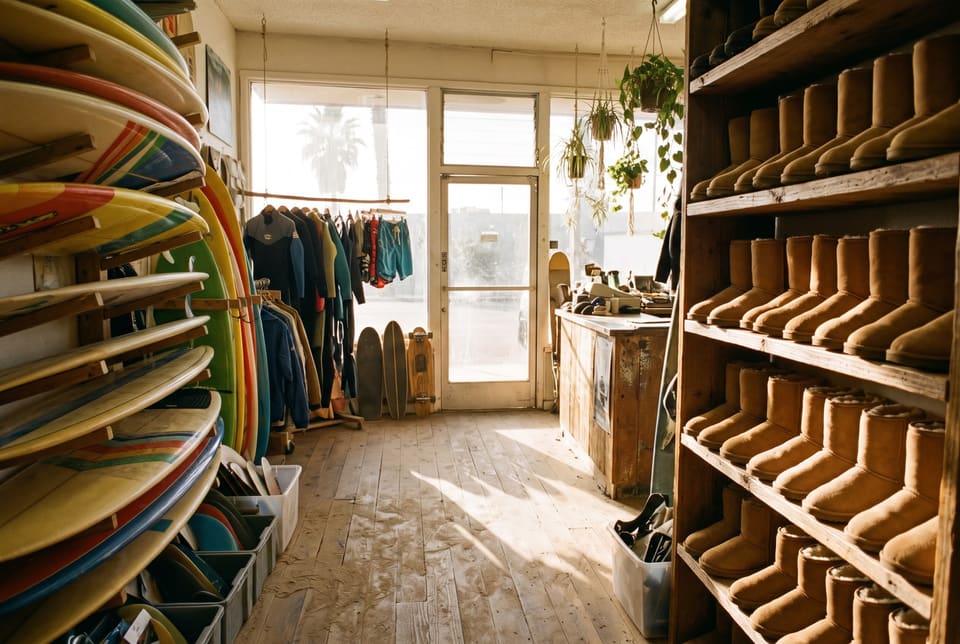
Whatever their exact origins, sheepskin boots found their most famous early audience on the beach. Surfers wore them to warm up after cold-water sessions, and the boots became part of Australian surf style in the 1960s and 1970s. ABC News, Australia's public broadcaster, summed it up in 2021: sheepskin ugg boots "began their life on the feet of Australian surfers".
One of those surfers was Shane Stedman, a surf champion turned businessman who began selling sheepskin boots in the early 1970s. According to a US federal court's summary of the record, Stedman registered "UGH-BOOTS" as an Australian trademark in 1971 (the Australian National Dictionary Centre credits the registration to his Shane Clothing Company) and registered "UGH" in 1982. Those registrations would matter decades later, as our trademark guide explains.
The boots also crossed the Pacific through the surf world. Green's Dictionary of Slang records a 1980 advertisement in Surfer magazine offering "Australian Sheepskin Ugg Boots" from Country Leather of Western Australia.
1978: Brian Smith takes sheepskin boots to California
The brand now known as UGG® began with Brian Smith, an Australian who had trained as a chartered accountant and loved to surf. In his 2014 memoir, The Birth of a Brand, Smith writes that in 1978 he was 28 years old and had been in California for less than six months. He started importing Australian sheepskin boots to sell to Southern California's surf community; HuffPost reported in 2014 that the company was founded in 1978 as Ugg Imports.
The boots caught on with surfers first. Deckers' annual report for 2003 says UGG "gained brand recognition in the U.S. beginning in 1979" and was "adopted as a favored brand by the California surf community". Smith's business, later organized as Ugg Holdings, worked to protect the name. A 2018 US court opinion records that the US Patent and Trademark Office refused Smith's 1980 application to register "UGG", finding that the word did not serve to identify and distinguish his goods. A ram logo containing the name was registered in 1987, and in May 1996, by then under Deckers' ownership, Ugg Holdings received a US registration for the word UGG itself.
1995: Deckers buys the brand
Deckers Outdoor Corporation, a footwear company founded in Santa Barbara, California, in 1973, whose brands at the time included Teva sandals, bought the business in 1995. Its annual report for 1996 states that "effective August 1, 1995," it acquired all of the shares of Ugg Holdings, Inc. The price was about $12.7 million, made up of a $12 million down payment, a $500,000 final payment due in 2000 and about $200,000 of expenses, plus further payments equal to 2.5% of the business's net sales through March 2000.
That same report is candid about the brand Deckers had bought. It described UGG as "a line of authentic sheepskin footwear, popularized in Australia in the 1960's and 1970's," noted that the product had "historically been predominantly a Southern California product" and said it "had become stale and became subject to low cost imitations." Deckers began moving the brand upmarket. The report also mentions that UGG had been selected by Champion Sportswear to provide footwear for US Olympic athletes in 1994 and 1996.
Growth was slow at first. UGG's net sales were about $14.8 million in 1996 and $15.3 million in 2000. By then, Deckers said it was targeting "a luxury consumer who seeks high quality, luxurious and fashionable products for cold weather", and it planned to advertise in upscale magazines such as Vogue and O.
The 2000s: Oprah, celebrities and a fashion boom
The turning point came on television. According to Deckers' annual report for 2000, in November 2000 UGG boots were featured on The Oprah Winfrey Show as one of ten holiday gift ideas, and every member of the studio audience received a free pair on air. The episode aired several times between Thanksgiving and Christmas, and Deckers credited the endorsement, on the show and in Winfrey's magazine, for part of that year's sales increase. Later filings list UGG as a featured item on "Oprah's Favorite Things" in 2000, 2003 and 2005.
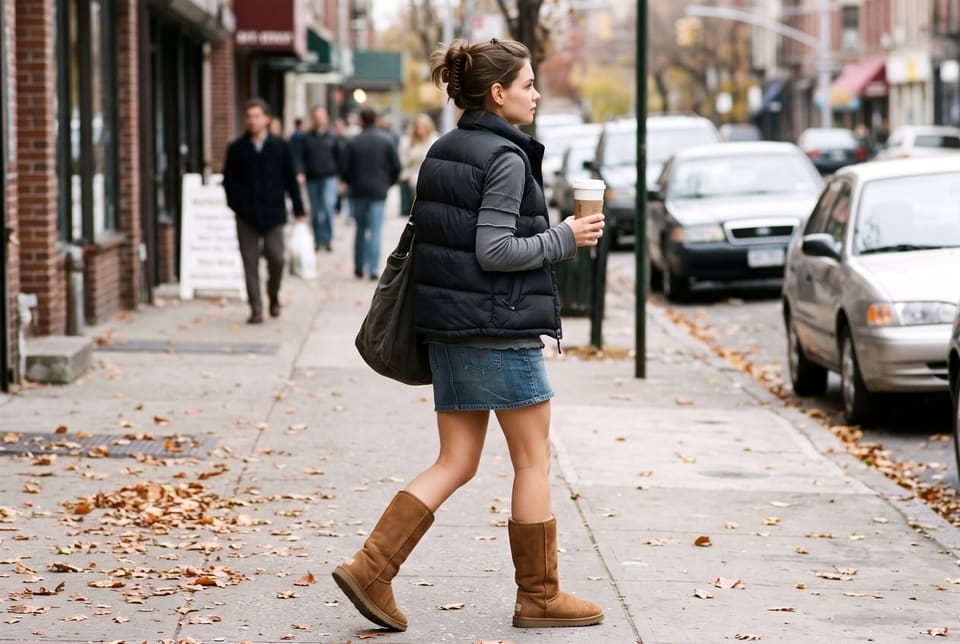
Hollywood followed. Deckers' filings from the mid-2000s note that the brand had been "embraced by Hollywood celebrities, who are often seen and photographed wearing UGG boots," and that celebrity exposure had heightened awareness of the brand. Tall sheepskin boots worn with miniskirts or leggings became a familiar look of the decade. Sales took off: Deckers reported that wholesale UGG sales grew from about $23.5 million in 2002 to about $182 million in 2006. Department stores such as Nordstrom and Neiman Marcus carried the boots, and Deckers opened its first UGG concept store in New York in 2006.
In 2011, UGG brand net sales passed $1 billion for the first time, reaching about $1.2 billion, and Deckers ended that year with 34 UGG Australia concept stores worldwide. Success also attracted counterfeiters: Deckers later said law enforcement seized more than 2.5 million counterfeit UGG products between 2007 and 2015. Our authenticity guide covers how to avoid them.
Trademark battles and a new name
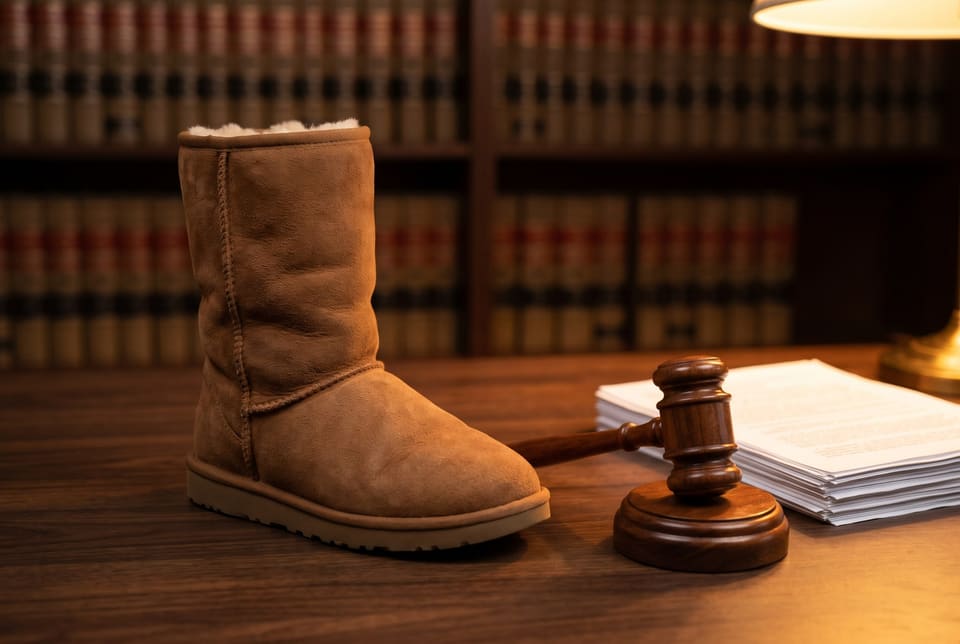
As the brand grew, so did the conflict over its name. In Australia, local makers argued that "ugg" was simply the ordinary word for a sheepskin boot. In 2006, both of Stedman's old marks, "UGH-BOOTS" and "UGH", by then owned by Deckers, were removed from the Australian trademark register for non-use, starting with a decision on "UGH-BOOTS" in January. Deckers has acknowledged in its annual reports that a claim that "ugg" is a generic term "was successful in Australia", while similar claims were rejected by courts in the United States, China, Türkiye and the Netherlands. In the US, the dispute culminated in Deckers' case against the Australian maker Australian Leather, which ended in 2021 when the US Supreme Court declined to hear the company's appeal. The full story is in our trademark guide.
The brand's own name changed too. For decades it was sold as "UGG Australia". Deckers' annual reports from 2015 and 2016 note that it had "faced claims that 'UGG Australia' is geographically deceptive." Its consumer notices in November 2015 still directed shoppers to uggaustralia.com, while its 2016 announcements used "UGG" and ugg.com. A 2018 US court opinion dates the rebrand to 2015. Today Deckers describes UGG as "born on the California coast to warm surfers after they caught and rode the waves."
The 2020s revival
After two decades as a winter staple, UGG found a new generation of fans in the 2020s, helped by social media and nostalgia for 2000s fashion. Lyst, a fashion shopping platform that publishes a quarterly ranking of the "hottest" brands and products, put UGG in its top 20 brands for the fourth quarter of 2022, citing more than 1.2 billion mentions on TikTok and an 82% jump in searches for the Ultra Mini boot, which had been sold out at many retailers for months. In the fourth quarter of 2023, the Tasman slipper was sixth on Lyst's list of hottest products. A year later, UGG was tenth among Lyst's hottest brands and the Classic Ultra Mini was the second-hottest product of the quarter, with Lyst reporting that UGG searches rose 358% over three months as "Mini UGG outfit inspo" spread on TikTok.
The revival went beyond one boot. Platform versions of classic boots and slippers, the braided-collar Tasman and its platform cousin the Tazz, and a steady run of designer collaborations kept the brand in fashion coverage. Explore the current lineup in our styles guide, including classic boots, platforms and slippers, and see retired icons for styles that have left the range.
The numbers reflect the comeback. UGG brand net sales reached about $2.24 billion in Deckers' fiscal 2024 and about $2.74 billion in fiscal 2026, the year ended March 31, 2026, roughly half of the company's total sales. Read more about the business in the UGG brand today, and tell other owners how your pair has held up by writing a review.
Timeline
| Year | Milestone |
|---|---|
| 1916 | Specially designed sheepskin flying boots, nicknamed "fug boots", are introduced for British aircrew. A link to the word "ugg" is unproven. |
| 1958 | Frank Mortel emigrates from the Netherlands to Australia and sets up a small sheepskin factory; his family later says it called the boots "Uggs" from the start. |
| Late 1960s | Earliest evidence of the word "ugg" in Australia, associated with surfers, according to the Australian National Dictionary Centre. |
| 1971 | Surfer Shane Stedman registers "UGH-BOOTS" as an Australian trademark. |
| 1978 | Brian Smith starts selling Australian sheepskin boots in Southern California. |
| 1980 | The US Patent and Trademark Office refuses Smith's application to register "UGG". |
| 1982 | Stedman registers "UGH" in Australia. |
| 1987 | A ram logo containing the UGG name is registered in the US. |
| 1995 | Deckers acquires Ugg Holdings, Inc., effective August 1. |
| 1996 | The UGG word mark is registered in the US (May). |
| 2000 | UGG boots appear on The Oprah Winfrey Show as a holiday gift pick (November). They are featured again in 2003 and 2005. |
| 2006 | IP Australia removes the "UGH-BOOTS" registration for non-use (January). The first UGG concept store opens in New York. |
| 2011 | UGG brand net sales pass $1 billion for the first time. |
| 2015–2016 | "UGG Australia" becomes simply "UGG". |
| 2019 | A US jury finds that Australian Leather and its owner willfully infringed the UGG trademark (May). |
| 2021 | The US Supreme Court declines to hear Australian Leather's appeal (December). |
| 2022 | Demand for the Ultra Mini helps put UGG in Lyst's top 20 hottest brands (fourth quarter). |
| 2024 | The Classic Ultra Mini is Lyst's second-hottest product of the fourth quarter. |
| Fiscal 2026 | UGG brand net sales reach about $2.74 billion, roughly half of Deckers' total. |
Frequently asked questions
Who invented the ugg boot?
No single person. Sheepskin footwear was made in Australia long before the brand existed, the origin of the word "ugg" is unknown, and several Australian makers have claimed a role. The UGG brand itself was started by Australian surfer Brian Smith in Southern California in 1978.
When did Deckers buy UGG?
Deckers Outdoor Corporation acquired Ugg Holdings, Inc. effective August 1, 1995, for about $12.7 million plus payments tied to the brand’s sales through March 2000, according to its annual report for 1996.
Was UGG on Oprah’s Favorite Things?
Yes. Deckers’ annual reports say UGG boots were featured on The Oprah Winfrey Show’s holiday gift episode in November 2000, when every audience member received a pair, and again on Oprah’s Favorite Things in 2003 and 2005.
Why don’t UGG boots say “Australia” anymore?
The brand dropped “Australia” from its name in the mid-2010s; a 2018 US court opinion dates the rebrand to 2015, and the change was visible in the brand’s communications by 2016. Deckers’ annual reports from that time note claims that “UGG Australia” was geographically deceptive. Today the company describes UGG as born on the California coast.
When did UGG boots become popular again?
In the early 2020s. Fashion platform Lyst ranked UGG among its hottest brands in late 2022, citing TikTok buzz and demand for the Ultra Mini, and ranked the Classic Ultra Mini its second-hottest product in late 2024.
Sources
- Royal Air Force Museum: Royal Flying Corps thigh-length boots (1918)
- The Independent via NZ Herald: "Boot battle turns ugg-ly" (Feb. 20, 2004)
- Australian National Dictionary Centre (ANU): Australian words, U
- Green’s Dictionary of Slang: "ugg boots"
- ABC News: trademark battle for Australian ugg boots back in US court (May 5, 2021)
- Brian Smith, The Birth of a Brand (Beyond Words, 2014)
- HuffPost: "Ugg Is Sick Of Being Pigeonholed For Its Boots" (Aug. 16, 2014)
- Deckers Outdoor Corp. Form 10-K405 for 1996 (Ugg Holdings acquisition)
- Deckers Outdoor Corp. Form 10-K for 2000 (Oprah Winfrey Show, November 2000)
- Deckers Outdoor Corp. Form 10-K for 2003
- Deckers Outdoor Corp. Form 10-K for 2006
- Deckers Outdoor Corp. Form 10-K for 2011
- Deckers Outdoor Corp. Form 10-K for fiscal 2016
- Deckers Outdoor Corp. v. Australian Leather Pty. Ltd., N.D. Ill., opinion of Sept. 13, 2018 (GovInfo)
- Deckers Brands: "UGG Turns Up The Heat On Counterfeit Protection" (Nov. 23, 2015)
- Deckers Brands: "Buying Real UGG Product, Know the Facts" (Nov. 30, 2016)
- Deckers Brands: How we got here
- Lyst Index, Q4 2022
- Lyst Index, Q4 2023
- Lyst Index, Q4 2024
- Deckers Outdoor Corp. Form 10-K for fiscal 2024
- Deckers Outdoor Corp. Form 10-K for fiscal 2026